When choosing heating and cooling systems for a home or building, efficiency is of paramount importance as it directly affects the energy bill, environmental footprint and system performance. The efficiency of a heat pump is measured by its coefficient of performance (COP). The higher the system efficiency is, the more it can provide stable temperature control while reducing energy consumption.
Among various heat pump technologies, geothermal heat pumps and air-to-water heat pumps are two widely recognized efficient solutions. Although both are excellent choices for traditional systems, a direct comparison shows that in terms of pure efficiency indicators, geothermal heat pumps are clearly the winners.
The fundamental advantage of a geothermal heat pumps lies in its utilization of the stable underground temperature of the earth. Unlike the surface air temperature which fluctuates sharply with the seasons and weather, the underground temperature remains relatively constant throughout the year.
By exchanging heat with this stable heat source, the geothermal heat pump does not need to deal with the challenges of extreme high and low temperatures as air source equipment does, thereby significantly reducing the additional energy loss during operation. In heating mode, it effectively absorbs heat from the ground, while in cooling mode, it repels the heat to the colder ground.
Therefore, geothermal systems can always achieve very high COP, usually between 4.0 and 5.5, or even higher. This means that their efficiency is 400-550%. Because the ground temperature does not fluctuate like the air temperature, their performance remains very stable throughout the year.
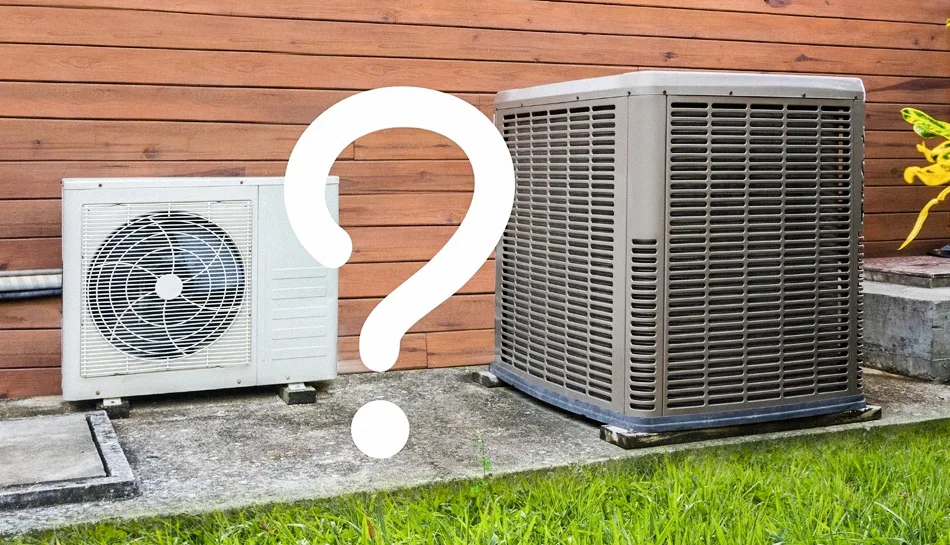
Air-to-water heat pump extracts heat energy from outdoor air and transfer it to water-based systems for space heating and household hot water. Compared with geothermal energy, its main advantages are lower initial installation costs and fewer requirements for site conditions.
However, its efficiency is intrinsically related to the temperature of the outside air. As the temperature drops, the available heat energy in the air decreases, and the unit must work harder to extract it. Although modern cold climate models are impressive and can operate at temperatures far below freezing, their COP decreases as the temperature drops.
At a mild 47°F (8°C), the COP of an air-to-water heat pump may reach 3.5 to 4.5. However, at lower temperatures, such as 17°F(-8°C), its efficiency may significantly decline, sometimes dropping to 2.0 or even lower, requiring a backup resistance heater to meet the demand, which is extremely inefficient.
In terms of pure efficiency, geothermal heat pumps are more efficient. The reason is simple: they exchange heat with a heat source (the ground) that is far more stable than the surrounding air. This stability enables them to maintain a high COP throughout the year, without a sharp decline during extremely cold winters or heatwaves in summer. The efficiency of air-to-water heat pumps is a moving target, peaking in mild shoulder seasons and declining when heating needs are greatest.
Although geothermal energy outperforms in terms of efficiency, the choice is not that simple and other key factors must be taken into account. Due to the need for ground circuits, the installation cost of geothermal systems is much higher, which requires a large amount of excavation or drilling. The initial investment in the air-to-water system is much lower.
In addition, geothermal energy requires sufficient land for horizontal loops or suitable geological conditions for vertical drilling. Not every property can accommodate it. Air-to-water units only require the location of one outdoor unit, making them suitable for almost any property.
Air-to-water heat pump technology has made tremendous progress. For regions with mild winters, the air-to-water system is generally highly efficient and cost-effective. In regions with long and harsh winters, the continued high efficiency of geothermal over time may justify its higher upfront costs.
If the only question is “Which one is more efficient?” The answer is definitely a geothermal heat pump. It takes advantage of the earth’s ability to maintain a constant temperature to achieve an excellent and stable COP value throughout the year.
However, the “better” choice depends on a balance of various factors, including local climate, installation budget, property characteristics and long-term energy-saving goals. For those who can afford the initial investment and have a suitable location, geothermal heat pumps offer unparalleled efficiency. For others, modern air-to-water heat pumps are an excellent and efficient alternative to fossil fuel systems.

Company
